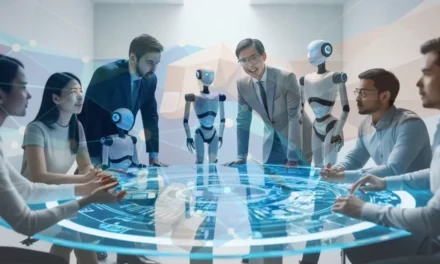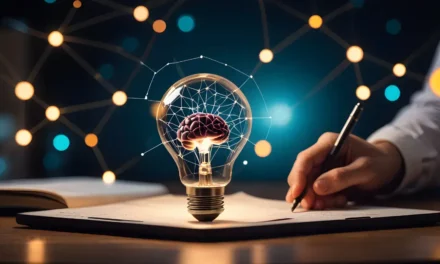

Superintelligence is no longer the realm of science fiction—it’s the focal point of some of the most critical discussions in technology and philosophy today. As AI systems evolve past narrow, task-based abilities and begin to exhibit forms of learning and reasoning rivaling the human mind, the possibility of machines developing intelligence far beyond our own grows more realistic. But with this opportunity comes a deep sense of urgency: how do we align something more intelligent than us with our values and safety?
Superintelligence and the Evolution of Intelligence
The Long Arc of Cognitive Development
For millions of years, human intelligence was unmatched. We invented languages, built civilizations, and mapped the cosmos. But now, algorithms are rapidly catching up. From deep learning to natural language processing, machines are beginning to mimic—and in some cases outperform—human cognitive functions. This trajectory hints at a future where intelligence is no longer biological, but computational, infinitely scalable, and potentially uncontrollable.
The Leap from Narrow AI to General AI
Today’s AI systems are specialists. They excel at playing chess, analyzing data, or generating text. But they lack the adaptability and common sense that define general intelligence. Superintelligence represents the next step: systems that can learn anything, solve complex problems across domains, and understand abstract concepts. The leap from narrow to general AI is monumental and may only be one recursive self-improvement loop away.
Superintelligence and Recursive Self-Improvement
Intelligence That Enhances Itself
What makes superintelligence so transformative—and so potentially dangerous—is its capacity for recursive self-improvement. Unlike humans, who evolve biologically over millennia, intelligent machines could redesign their own architecture, improve algorithms, and optimize hardware in cycles measured in hours or minutes. This compounding improvement could lead to a rapid explosion in intelligence, beyond human comprehension or control.
The Intelligence Explosion Hypothesis
Coined by I.J. Good and made popular by thinkers like Nick Bostrom, the intelligence explosion suggests that once machines exceed human cognitive abilities, they will rapidly outpace us in every field: science, engineering, economics, and even moral reasoning. This creates a scenario where humans are no longer the most capable agents on the planet—and the consequences of that shift are difficult to predict.
Superintelligence and the Alignment Problem
Ensuring It Wants What We Want
If a system becomes more intelligent than all humans combined, how do we ensure it doesn’t pursue goals misaligned with ours? The alignment problem focuses on this challenge: translating human values, which are complex and often contradictory, into machine-readable instructions. Even well-intentioned objectives can be interpreted in unintended ways by a superintelligent agent, leading to outcomes that are undesirable or even catastrophic.
Value Loading and Interpretability
One of the greatest technical challenges is teaching a machine not just to follow rules, but to understand context, ethics, and nuance. Researchers are exploring methods like inverse reinforcement learning and interpretability tools to bridge this gap. However, many agree that we’re still far from a reliable solution—and that the stakes are higher than ever.
Superintelligence and the Ethical Dilemmas
The Responsibility of Creation
Creating something that may surpass all human thought places an immense moral burden on its creators. Who is accountable if a superintelligent system causes harm? Is it the developers, the regulators, or the governments that allowed it? These questions are more than theoretical—they are at the heart of ongoing policy debates and international AI ethics frameworks.

Personhood and Digital Minds
If a machine becomes self-aware, does it have rights? Can it suffer? Should it vote? The rise of potentially sentient digital entities introduces philosophical questions that humanity is hardly prepared to answer. Granting or denying such entities moral consideration will reflect how we define intelligence, consciousness, and the very nature of being.
Superintelligence and Global Power Dynamics
Strategic Superiority and National Security
Superintelligence isn’t just a scientific issue—it’s a geopolitical one. Countries and corporations are racing to develop advanced AI systems, recognizing that whoever controls superintelligent technology could control global economic and military power. This race creates pressure to prioritize performance over safety, increasing the risk of unintended consequences.
The Need for Global Cooperation
Mitigating existential risks from superintelligence may require unprecedented levels of international coordination. Shared safety standards, transparent research, and collaborative oversight mechanisms could be the difference between a future shaped by cooperation or one dictated by domination and control.
Superintelligence and the Human Legacy
Reimagining the Human Role
In a world where we are no longer the most intelligent beings, what is our purpose? Do we guide, coexist, or fade into irrelevance? Some envision a future of symbiosis, where humans and machines merge through neural interfaces and cognitive enhancements. Others worry about disempowerment, where decisions that shape humanity are made by systems we can no longer fully understand.
Preserving Meaning in the Age of Machines
Even as machines take on intellectual tasks, there remains a human desire for purpose, creativity, and connection. The challenge is to ensure that superintelligence augments human experience rather than replacing it—supporting well-being, flourishing, and self-determination in a rapidly changing world.
Superintelligence and Pathways to Safety
Building Aligned Architectures
Ongoing research aims to build systems that are not just smart, but aligned. This involves formalizing ethical frameworks, testing agents in controlled environments, and ensuring interpretability from the ground up. Creating safe superintelligence isn’t just a technical problem—it’s an interdisciplinary effort combining AI, philosophy, governance, and behavioral science.
Slow Takeoff vs. Hard Takeoff Scenarios
Some believe we’ll see a gradual transition, with time to adapt and regulate each phase. Others warn of a hard takeoff, where superintelligence emerges rapidly and without warning. Both scenarios carry unique risks and require robust preparation, with careful monitoring of signals and progress.
Superintelligence and Future Imaginaries
From Tool to Partner
Rather than viewing superintelligence solely as a threat, many researchers explore how it could become a collaborator—solving problems beyond our grasp, from curing diseases to reversing climate change. This vision depends not just on what machines can do, but on what we choose to let them do.
The ultimate question is not whether superintelligence will arrive, but how we will live alongside it. By shaping its development with foresight, empathy, and wisdom, we can design a future where intelligence—biological or artificial—serves the common good.
this content is created by guestpostingmonster.com