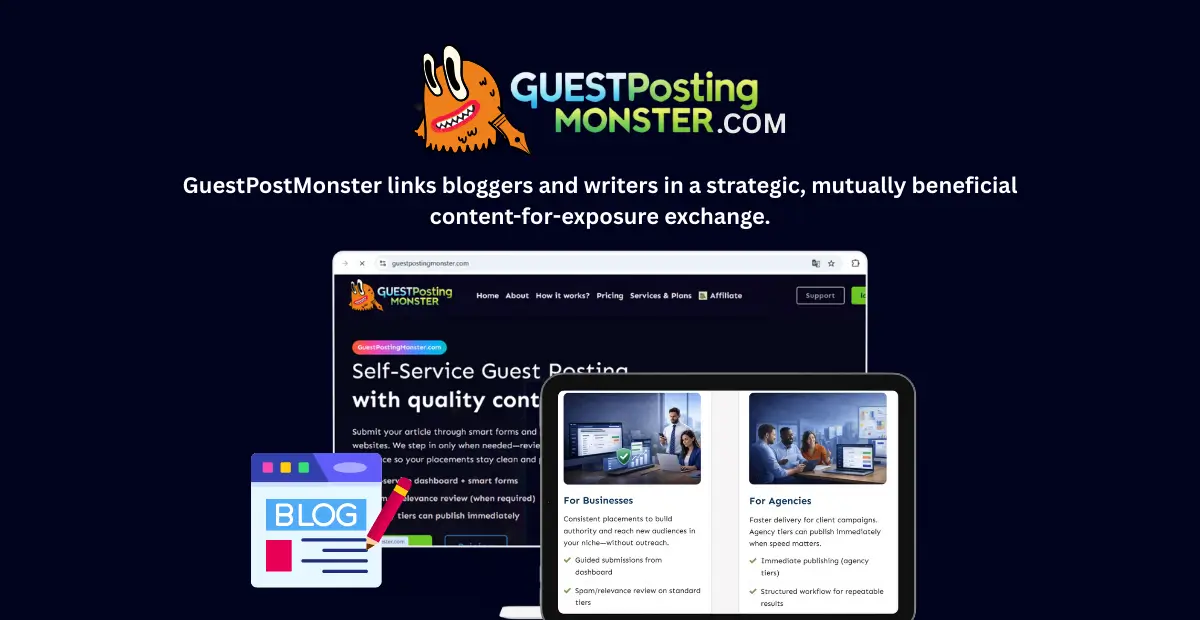
GuestPostingMonster directly addresses the main problem with digital content: bloggers need good articles to grow, and writers need good places to get their work seen. It fills this gap by building a curated ecosystem that links these needs, turning random efforts into strategic partnerships that help both sides.
GuestPostingMonster: The Missing Link Between What Bloggers Need and What Writers Want
In the world of digital marketing, it has long been a chaotic and often frustrating task to find the perfect balance between a blogger’s need for good content and a writer’s need for meaningful exposure. GuestPostingMonster could be a way to solve this widespread problem by systematically closing the gap. This platform’s goal is to make connections easier by creating a structured marketplace where the missing link between bloggers’ content needs and writers’ desire for exposure is found and turned into productive, mutually beneficial partnerships.
The Ongoing Divide: Why Content Needs and Writer Exposure Don’t Often Match Up
For a long time, the content ecosystem has been based on a broken model. Bloggers and site owners, on the other hand, are under a lot of pressure to consistently publish high-quality, SEO-friendly content to build their authority and traffic. It’s often not possible to make the huge amount needed in-house. On the other hand, many talented writers, industry experts, and up-and-coming journalists have a lot of knowledge but not the right platforms or audiences to share it with.
They want credible bylines and domain authority to build their portfolios. In the past, connecting these two groups has relied on scattered outreach, impersonal content mills, or complicated PR campaigns, which were all inefficient, poorly communicated, and had mismatched expectations. The human cost is real: bloggers are acceptable with bad content, and good writers go unnoticed. This dilemma is more than just a logistical issue; it’s also a creative and financial drain on the whole content marketing business.
Clear explanations of the main ideas regarding how GuestPostingMonster works
GuestPostingMonster is a curated platform at its core that makes it easy to post as a guest on a large scale. It is a mix of a marketplace and a project management system that tries to make the guest posting process easier. The main selling point is quality and clarity over quantity, which sets it apart from spammy link-building services.
The Architecture of a < Dual-Sided Platform
The platform is made for two main types of users: the Publisher (blogger, site owner, or content manager) and the Writer (content creator, expert, or contributor). Publishers list their sites and explain their content rules, target audience, niche focus, and editorial standards. They can tell you what topics they need content for and what kind of exposure they can give you, like a dofollow link, an author bio, or social media promotion. Writers make detailed profiles that show off their skills, writing samples, and areas of interest. The platform’s algorithm then suggests possible matches, but it is important to note that there is a human-led curation layer. We design this architecture to prioritize strategic alignment over keyword-based matching.
The Framework for Vetting and Quality Assurance
GuestPostingMonster is different from directory-style listings because it claims to put more emphasis on vetting. The platform says it checks both writers and publishers to make sure they meet a certain quality standard. To keep writers from writing for spammy or penalized sites, publishers might check things like domain rating and traffic, as well as the quality of the writing. For writers, it means going over their portfolios to ensure they have a certain level of writing skill and knowledge of the subject. This procedure makes the environment safe because writers know that the sites they contribute to are useful, and publishers know that the writers can produce work that can be published. This framework directly addresses the lack of trust that makes open guest posting outreach so hard.
How to Use a Guest Post Platform to Make a Winning Plan
To use a platform like GuestPostingMonster in your content strategy, you need to do more than just make a profile. Both publishers and writers need to take a strategic and professional approach to get the most out of their work.
For Bloggers and Site Owners:
1. Write an intriguing publisher profile: Your site listing is your pitch to top writers. Don’t just say how much authority you have in your field. Talk about your community’s personality, your mission, and what makes writing for it special. Be open about your link policy and how you usually interact with your audience.
2. Be Specific in Your Content Briefs: Instead of asking for “SEO articles,” write up detailed briefs. Tell us what you want the target keyword to mean, what kind of structure you want (listicle, how-to, or case study), what key points you want to cover, and what competitor articles you like. The more help you give, the less back-and-forth there is, and the better the final product will be.
3. See Writers as Partners, Not Vendors: Writers who care about what they write make the best content. Give clear bylines, share their work on your social media, and give them constructive feedback on their writing. This helps writers build relationships that lead to more contributions and referrals.
For Writers Who Want to Get Noticed:
1. Make yourself look like an expert, not just a writer: Your profile should scream that you are an expert. Instead of saying “I write about business,” say “I turn complicated SaaS onboarding flows into clear, conversion-focused blog posts for non-technical founders.” Include real-life examples that show this.
2. Find out what the publisher is really worth: Don’t just look at Domain Rating. Look closely at the site’s real content, how people interact in the comments section, and its presence on social media. A site with a lower Domain Authority (DA) but a highly engaged, niche audience holds significantly more value than a stagnant site with a high DA.
3. Pitch with Accuracy and Insight: Your pitch should show that you have read their blog carefully when you discovered a wonderful site. Point to a recent article, add a new perspective or idea, and explain how your suggested piece fills a gap in their current content matrix.
Mistakes People Make and How to Avoid Them
Mistakes that can be avoided can hurt the efforts of both new and experienced professionals on sites like GuestPostingMonster.
Mistakes by the publisher:
• The Brief with Only Keywords: When you ask for an article that is only optimized for a high-difficulty keyword without providing any information about the audience’s pain points, you get generic, boring content that doesn’t do well in SEO or user engagement. Corrective Action: Start by framing the brief around the reader’s question and purpose, and then add the keyword in a natural way.
• Not paying attention to the writer onboarding process: If you think a writer knows your house style or editorial preferences, you’ll have to go through a lot of revisions. Corrective Action: Before a new writer starts, give them a short style guide that includes tone, voice, formatting preferences, and image specs.
• Viewing content solely as a means to obtain links will result in poor quality, which will deter smart writers from engaging with your site. Google’s algorithms are getting better and better at finding these kinds of low-value partnerships. Corrective Action: Put content that is useful to your human audience first. Real value is what gives you the link and SEO benefits.
Mistakes by the Writer:
• Spray-and-Pray Pitching: Sending the same pitch to dozens of publishers using a template shows that you don’t care and will get your profile downgraded or ignored. Corrective Action: Make each pitch unique. Quality always beats quantity.
• Overpromising and Under-Delivering: Agreeing to write about something you’re not very knowledgeable about in order to get a byline on a big site often leads to shallow content, loss of credibility, and a burned bridge. Corrective Action: Be brutally honest about your niche. Having a lot of knowledge about a small subject is much more useful than having a little knowledge about a big one.
• Not Engaging After Publication: Your work isn’t done once your article is published. Responding to comments and sharing the piece with your network increases the chance to receive more views. Corrective Action: Set aside time to respond to comments on your guest post and share it on all of your professional social media accounts, making sure to tag the publisher.
Examples of Cases: Real Uses for Structured Guest Posting
Case Study 1: The Niche B2B SaaS Blog A cybersecurity SaaS company blog (DA 42) needed regular, high-quality content on zero-trust architecture, but they didn’t have any experts on staff to write it. They got in touch with a former network security architect who is now a writer through GuestPostingMonster. The author wrote a four-part series that was very detailed and technical.
This series became important content for the publisher because it ranked for a number of mid-funnel keywords and brought in qualified leads. The byline on a well-known industry blog led to three consulting requests for the writer and made him the go-to writer for other tech publishers on the platform. The key was the platform’s ability to match a publisher’s exact content gap with a very specific area of expertise.
Case Study 2: The Lifestyle Blogger Who Became an Authority A sustainable travel blogger (DA 28) with a strong visual brand but limited SEO knowledge wanted to attract more visitors to her site when users searched for “plastic-free hiking gear.” She used the platform to locate a writer who could write product reviews that were beneficial for SEO. The author wrote a guide that was based on a lot of research and comparisons.
The blogger wrote the parts about the amazing photos and the personal stories. The platform’s workflow tools enabled the collaboration, resulting in a hybrid piece that was both authentic and technically accurate. The post made it into the top three, which brought in a lot of money for the blogger’s affiliates and made the blogger’s site look better to bigger brands for future partnerships.
More Advanced Insights: The Future of Guest Posting and the Growth of Platforms
Guest posting platforms need to stop being simple directories and start becoming smart content partnership networks if they want to survive. We will see a move toward more integration of data and reputation systems.
Here is our prediction for the evolution of guest posting platforms:
1. Portable Writer Reputation Scores: Writers will get platform-verified scores based on publisher feedback, on-time delivery rates, and content performance metrics (like the average time-on-page earned). This process is similar to how sellers get ratings on marketplaces. You could use this score as a credential.
2. AI-Enhanced Matchmaking, Human-Finalized: AI will look at a writer’s whole portfolio and a publisher’s content corpus to determine matches based on semantic topical clusters and stylistic alignment, not just keywords. The human editor will create the final link.
3. Performance-Based Pricing Models: In addition to flat fees, we may see models where writers receive a base rate plus a bonus based on how well their article does (for example, how many people read it or how many leads it generates). This format perfectly aligns incentives, but it needs open sharing of analytics.
4. The Rise of Micro-Expertise: Platforms will make it easier for people to connect with others who are very specific in their interests. Instead of just “science writers,” think of “writers who can explain quantum computing to pharmaceutical R&D teams.” More and more precise definitions will be given for the “missing link.”
Smart publishers and writers should get ready by working on their niche authority and digital reputation metrics. These data points will make it easier for people to trust these ecosystems.
The last thing to remember is bridging the gap with purpose and a plan.
GuestPostingMonster and other sites like it indicate that the guest posting space has grown up. Professionals agree that the old, messy approach of connecting through cold emails and untracked submissions is not beneficial. The “missing link” was not just a lack of meeting space but also a lack of curation, context, and respect. There is no automatic way to succeed on any of these platforms.
Bloggers need to stop viewing writers as mere content factories, and writers must stop seeing bloggers as only sources of links. A blogger must establish a connection between their strategic content vision and a writer’s practical knowledge. When that connection happens, it’s not just a transaction; it’s content that really helps an audience, builds lasting authority, and improves both parties. The platform is the bridge, but the strategy and people skills are what you bring with you.