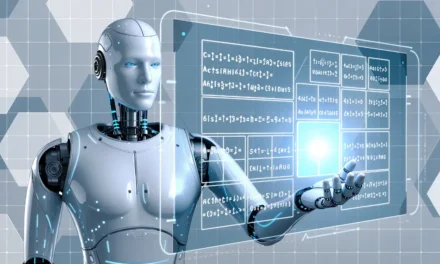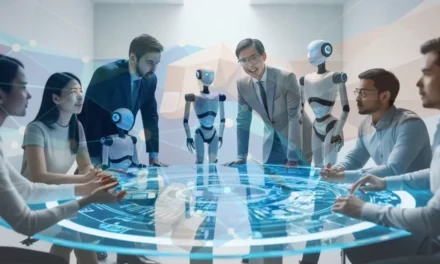
Automation and AI are no longer buzzwords—they’re the engines driving a new wave of industrial, social, and economic transformation. Together, they are redefining how decisions are made, how tasks are executed, and how businesses compete in the digital era. From streamlining manufacturing to transforming personalized healthcare, the convergence of automation and AI is changing the rules of the game. Embracing this shift is not just an option—it’s a necessity for those who want to thrive in the coming decade.
Automation and AI in Business Operations
Streamlining Efficiency and Cutting Costs
Organizations are increasingly relying on automated systems to handle repetitive tasks. Whether it’s invoicing, scheduling, or customer onboarding, automation reduces manual intervention and minimizes errors. In parallel, AI tools analyze huge volumes of data in real time, generating insights that enable companies to make smarter decisions faster. Together, these technologies free up valuable human resources, allowing teams to focus on innovation rather than routine.

Intelligent Supply Chains and Logistics
Modern logistics rely on predictive algorithms and automated workflows to manage global supply networks. From autonomous delivery vehicles to smart inventory systems, automation and AI have created supply chains that are not only faster but also more resilient. Businesses can anticipate disruptions, adjust shipments dynamically, and optimize costs across borders, improving both customer satisfaction and operational stability.
Automation and AI in the Workplace
Redefining Human Roles and Skills
As machines take over routine and repetitive duties, the human role in the workforce is shifting toward creativity, empathy, and complex problem-solving. Companies are redesigning job descriptions to align with this transformation, and employees are encouraged to develop hybrid skills that blend digital literacy with human judgment. This evolution requires new models of training and education that prepare people for AI-augmented environments.

Enhancing Productivity and Collaboration
Collaborative tools powered by AI—from smart assistants to automated scheduling—are boosting productivity in hybrid and remote work settings. Teams can work more efficiently by relying on real-time insights, automatic translations, and intelligent recommendations, allowing smoother coordination regardless of location. Automation ensures that employees can focus on high-value activities without being bogged down by administrative load.
Automation and AI in Healthcare
Personalized Medicine and Predictive Care
AI systems are now being used to analyze patient data and provide highly tailored treatment plans. From genomics to wearable sensors, intelligent systems can predict health risks, suggest preventive interventions, and monitor chronic conditions in real time. Automation supports clinicians by streamlining diagnostics, managing electronic records, and handling pharmaceutical logistics—all contributing to better outcomes and patient satisfaction.

Medical Robotics and Surgical Precision
Robotic systems assist in complex surgeries, improving accuracy and reducing recovery times. In hospitals, automation takes over mundane tasks like medication delivery and sterilization, allowing healthcare professionals to focus on critical care. These advancements not only improve service quality but also reduce strain on overstretched healthcare systems.
Automation and AI in Manufacturing
From Assembly Lines to Smart Factories
The shift from traditional manufacturing to smart factories represents a complete overhaul of production. Machines are no longer programmed with static commands; instead, they learn and adapt through continuous data inputs. Sensors and IoT devices monitor every aspect of production, while AI analyzes this data to optimize performance in real time.
Quality Control and Predictive Maintenance
AI-driven systems detect defects and anomalies with precision beyond human capability. Predictive maintenance tools, powered by machine learning, analyze equipment performance to forecast failures before they happen. This reduces downtime, increases safety, and extends the life of industrial assets.
Automation and AI in Customer Experience
Hyper-Personalization at Scale
AI enables companies to deliver tailored experiences to millions of users simultaneously. By analyzing user behavior, preferences, and past interactions, intelligent systems recommend products, personalize messaging, and even predict future needs. This level of personalization was once impossible without an enormous human workforce—it’s now automated and scalable.
Virtual Assistants and Chatbots
AI-powered chatbots and voice assistants handle customer inquiries 24/7, providing instant responses and improving service speed. These systems learn from interactions, constantly improving their ability to understand and resolve issues. While not replacing humans in all scenarios, they reduce wait times and handle routine questions with efficiency.
Automation and AI in Education
Adaptive Learning and Smart Classrooms
Digital education platforms now use AI to adjust learning paths based on individual progress and preferences. These systems identify strengths and weaknesses, offering customized resources and real-time feedback. Teachers benefit from data insights that help them tailor their instruction more effectively.
Automating Administrative Tasks
From grading to attendance tracking, automation saves time and reduces manual work for educators. This allows teachers to dedicate more energy to student engagement, mentoring, and curriculum development—enhancing the overall learning experience.
Automation and AI in Governance and Public Services
Smart Cities and Infrastructure
Urban areas are being reimagined through intelligent systems that manage traffic flow, monitor air quality, and optimize energy use. AI helps governments make data-driven decisions that improve quality of life and sustainability. Automation is applied in public transportation, waste collection, and utility services to increase efficiency and transparency.
Digital Public Services
Citizens now access services like licensing, tax filing, and benefits through automated portals. These systems streamline bureaucracy, reduce corruption risks, and increase accessibility—especially in regions where administrative capacity is limited.
Automation and AI in Ethics and Responsibility
AI systems can inherit and amplify biases if not designed carefully. Transparency in algorithm design, regular audits, and inclusive datasets are essential to ensure fair and ethical AI. Developers must consider the social implications of automation and build systems that respect privacy, diversity, and justice.
The Need for Global Standards
With the rise of automation and AI, there’s a growing call for international regulations. Frameworks must address issues like data sovereignty, algorithm accountability, and the ethical use of autonomous technologies. Cross-border cooperation is crucial to prevent misuse and encourage innovation that benefits everyone.
Automation and AI in the Future of Innovation
Autonomous Decision-Making and Self-Learning Systems
Tomorrow’s systems won’t just follow instructions—they’ll learn from experience and adapt dynamically. This evolution toward autonomy will allow machines to operate in unpredictable environments, from deep-sea exploration to disaster response, without constant human input.
Human-Centered Design in Intelligent Systems
The most powerful use of automation and AI is one that enhances human potential. Rather than replacing humans, these tools should augment human decision-making, empathy, and creativity. The future lies in designing systems that are collaborative, interpretable, and aligned with human values.
this content is created by guestpostingmonster.com