Forget the ominous headlines about AI stealing jobs. Walk into any digital workshop today—a marketer’s Slack channel, a indie filmmaker’s desktop, a startup founder’s notion board—and you’ll witness a quieter, more profound revolution. The narrative has shifted from replacement to augmentation. The hottest AI tools aren’t autonomous overlords; they are clever companions, quirky co-pilots, and instant upskillers, fundamentally altering the velocity and texture of human creativity.
We are no longer in the era of monolithic “AI.” We are in the age of the hyper-specialized, context-aware micro-tool. This is the toolbox revolution.
The New Toolkit: Beyond Chatbots and Image Generators
While ChatGPT and Midjourney grabbed the early spotlight, the real trend is in tools that solve specific, sometimes bizarrely niche, problems.
1. The Context Connoisseurs:
Tools like Mem.ai or Rewind.ai are building a “personal context engine.” They index everything you’ve seen, said, or heard on your device (with consent), creating a searchable, private memory. The promise? Never lose a thought, a link, or a fleeting conversation. Ask it, “What was that article about neuromarketing my colleague mentioned in a Zoom call three weeks ago?” and it finds it. This isn’t just a search bar; it’s an extension of your own cognition.
2. The Sensory Translators:
AI is becoming a universal translator for the senses. Kling AI and similar tools don’t just generate video from text; they understand cinematic language—”a sweeping drone shot over a cyberpunk city at golden hour, neon reflections on wet asphalt.” Suno.ai and Udio translate poetic prompts into full musical compositions, complete with structure and believable vocals. The barrier between an idea in one medium and its execution in another is dissolving.
3. The Autonomous Agents & Swarms:
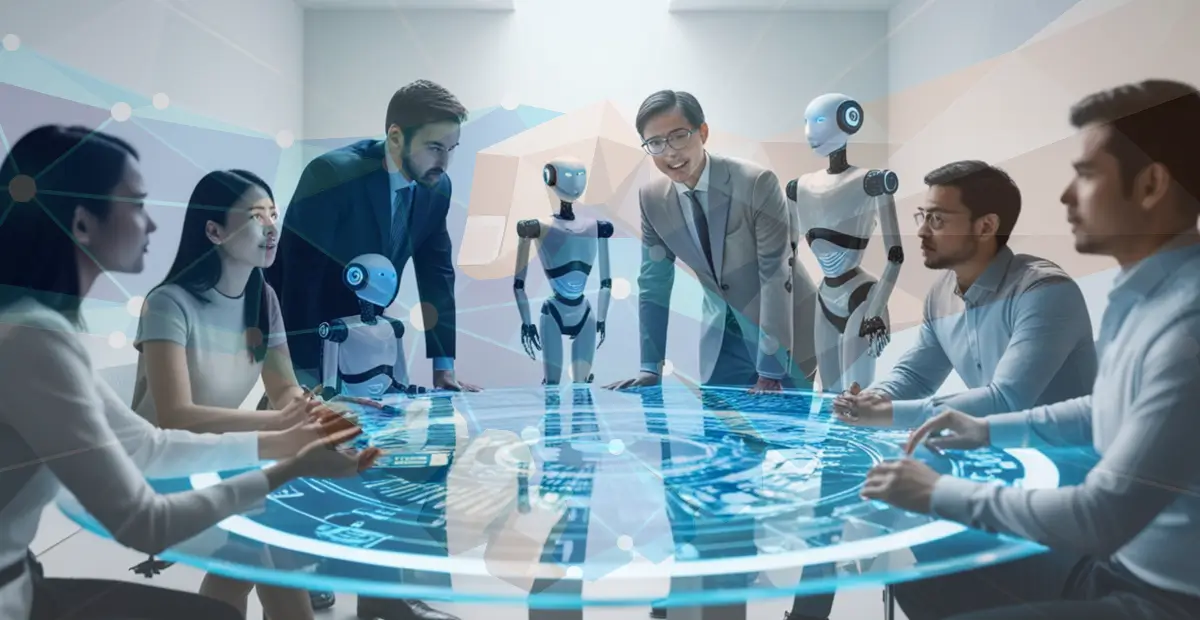
This is where it gets sci-fi. Tools like Cognition AI’s Devin (an AI software engineer) or open-source frameworks for creating AI agents signal a move from tools you operate to colleagues you delegate to. Imagine briefing a “swarm”: one agent researches, another drafts copy, a third designs visuals, and a project-manager agent orchestrates them. The trendy tool isn’t one app; it’s the orchestration platform itself.
4. The Physical World Integrators:
The trend isn’t confined to screens. Robotics platforms like Figure AI are pairing advanced large language models with humanoid bodies, enabling natural language command of physical tasks. In design, Generative AI for 3D modeling allows architects to say, “Give me a concept for a sustainable home that blends with this pine forest,” and get a manufacturable model. The digital is reaching out to reshape the physical.
Why This Trend is Different: The Democratization of Expertise
The underlying shift is democratization. Ten years ago, producing a professional animated short, composing an orchestral score, or conducting complex data analysis required years of specialized training. Today, a passionate amateur with a clear vision and the right AI toolbox can prototype at a level previously reserved for professionals.
This isn’t about making experts obsolete. It’s about changing their role from craftsmen of execution to editors of intention. The premium skill is no longer just technical proficiency in Photoshop, Premiere Pro, or SQL. It’s creative direction, taste, and discernment—the ability to guide the AI, to iterate on its outputs, to inject soul into the synthesized, and to ask the right, profound questions.
The Hidden Challenges in the Toolbox
This revolution comes with its own set of wrenches in the works:
-
The Homogenization Risk: If everyone uses the same foundational models, do we risk a stylistic monoculture? The counter-trend is the rush to fine-tune personal models on unique datasets—your own writing, your brand’s imagery, your musical style.
-
The Context Collapse: When an agent has access to all your information, where does your “self” end and the tool begin? Privacy and the definition of personal intellectual property become paramount.
-
The Velocity Tax: The ease of creation can lead to an avalanche of content. The next critical skill may be curation and silence—knowing when not to generate.
The Future Toolbox: What’s Next?
Looking ahead, the trends point toward:
-
Embedded & Invisible AI: The tools won’t be separate apps. They’ll be deeply integrated into the software we already use, like a “reasoning layer” in Photoshop or a “strategy assistant” in Excel.
-
Emotional & Bio-Feedback Tools: AI that adjusts its creative output based on your biometric signals—changing the music it generates if it detects stress, or altering a story’s tone based on your engagement.
-
Open-Source & Community-Driven Models: To combat homogenization, the most innovative toolkits will be those trained and refined by niche communities—a model fine-tuned by vintage comic book artists, or one trained on obscure philosophical texts.
The ultimate takeaway? The most important “trendy tool” in the AI age is, and will remain, the human mind. AI provides an unprecedented array of brushes, chisels, and lenses. But the vision, the intent, the wisdom to know what is worth building—and what is worth building with care—that is, and will always be, uniquely ours. The revolution isn’t automated; it’s amplified.